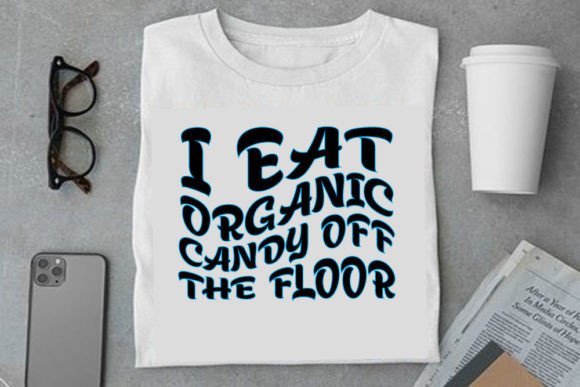
Retro Funny Design: I Eat Organic Candy Review
As a designer who has spent years translating digital files into tangible thread on fabric, I approach every new asset with a mix of excitement and skepticism. The market is flooded with T-Shirt Designs that look crisp on a screen but fall apart under the tension of an embroidery hoop. Today, I am putting the Retro Funny Design, I Eat Organic Candy to the test. This specific graphic, featuring the cheeky phrase "I eat organic candy off the floor," promises a blend of vintage aesthetics and modern humor. But does it hold up when we move from the digital realm to a real-world embroidery project? Let's dig into the practicalities of using this file for custom apparel and handmade goods.
First Impressions: Mood and Visual Personality
The first thing that strikes me about the Retro Funny Design, I Eat Organic Candy is its unapologetic attitude. It taps into a nostalgic, 70s-inspired color palette and font style that feels both retro and refreshingly current. The visual layout is straightforward, relying on bold lettering and a clear central message. For an embroidery file, clarity is king. Complex, thin lines often get lost in fill stitch or break down during digitizing. Here, the shapes appear robust enough to survive the translation process without losing their character.
When I visualize this as a finished product, it immediately screams personality. It isn't just a logo; it is a statement piece. The mood is lighthearted and self-deprecating, which translates perfectly into a conversation starter. Whether you are looking at it as a standalone Graphics element or part of a larger composition, the design maintains a strong visual hierarchy. The text is legible even at a glance, which is crucial for items like tote bags or sweatshirts where the viewer might only have a second to read the message.
A Real-World Scenario: The Custom Tote Bag Project
To truly evaluate this design, I need to place it in a realistic context. Imagine you are preparing a batch of canvas tote bags for a local craft fair or your Etsy shop. You want something that stands out among generic floral patterns. You decide to use the Retro Funny Design, I Eat Organic Candy on a natural, beige cotton canvas.
In this scenario, the texture of the canvas becomes a factor. A heavy-duty stabilizer will be essential to prevent the fabric from puckering, especially if the design includes dense areas. As I plan the placement, I consider the hoop size. If the design spans too wide, it might require splitting the hoop, which can lead to misalignment. Assuming the file is optimized for standard hoops, this design fits well in the center of a large tote bag. The contrast between the retro colors and the neutral background creates a striking effect. Customers browsing your booth would likely stop, read the funny slogan, and appreciate the craftsmanship. It transforms a simple utility item into a personalized gift or a unique fashion accessory.
Performance Across Different Fabrics and Products
While a tote bag is a great starting point, the versatility of the I Eat Organic Candy design extends further. Let's consider custom apparel like a heavyweight sweatshirt. On a fleece material, the softness of the fabric complements the retro vibe. However, because sweatshirts are stretchy, you must ensure the stitch density isn't too high, or the fabric may pucker around the edges of the letters. A balanced mix of satin stitch for outlines and fill stitch for the body usually works best here.
For smaller items, such as an embroidered patch or a cap, the design needs careful scrutiny. Caps present a curved surface, which can distort text if the digitizing isn't adjusted for curvature. If the "off the floor" part of the text is small, it might become illegible on a small cap brim. In these cases, simplifying the design or focusing solely on the main phrase might be necessary. Similarly, for baby embroidery projects, the safety and durability of the stitching are paramount. Soft threads and secure anchoring points are non-negotiable.
This design also shines in home decor applications. Picture it on a kitchen towel or a pillow cover. The humorous tone fits perfectly in a playful kitchen setting. However, keep in mind that kitchen towels undergo frequent washing. The thread colors must be colorfast, and the stitching should be tight enough to withstand agitation without fraying. If you are creating holiday gifts, this design offers a fun, unexpected twist that breaks away from traditional seasonal themes.
Areas of Caution: Where to Be Careful
Despite its strengths, the Retro Funny Design, I Eat Organic Candy requires caution in certain situations. First, avoid using it on very thin or sheer fabrics. The weight of the thread could overwhelm the material, causing distortion. Second, if you are working with dark fabrics, ensure you have selected the right backing and perhaps a slightly thicker stabilizer to support the lighter thread colors. Without proper preparation, the design might look muddy rather than vibrant.
Detailed corners and tiny lettering are another potential pitfall. If the file contains extremely fine details, they may not stitch cleanly on all machines. Always check the digital embroidery file before committing to a run. If the text "off the floor" is significantly smaller than the main headline, verify that it remains readable after stitching. Sometimes, what looks perfect on a monitor gets swallowed by the needle path.
Impact on Brand Value and Customer Trust
For small business owners and Etsy sellers, the quality of your design assets directly impacts your brand perception. Using a well-executed design like this one signals professionalism. It shows that you care about the final presentation. When a customer receives a handmade product with crisp, clean embroidery, their trust in your brand increases. They are more likely to return and recommend your shop.
The humor in the design also enhances buyer engagement. It makes the product memorable. In a sea of serious or overly sentimental designs, a witty slogan like "I eat organic candy off the floor" can capture attention and drive sales. It adds value to the finished product by giving it a story and a personality. Whether you are selling commercial embroidery services or creating your own line of merchandise, choosing designs with strong visual appeal and relatable content is a smart business move.
Practical Designer Notes for Success
Before you start stitching, follow these practical steps to ensure the best results with the Retro Funny Design, I Eat Organic Candy:
- Test on Scrap Fabric: Never skip the test run. Stitch the design on a scrap piece of the same fabric you intend to use. Check for puckering, thread breaks, or alignment issues.
- Check Thread Contrast: Ensure the thread colors pop against your fabric background. Use a color wheel or a mockup tool to preview the combination.
- Review Stitch Density: Look at the digitized file to see if any areas are too dense. Adjust settings if necessary to prevent fabric distortion.
- Confirm Hoop Size: Measure the design dimensions against your available hoops. If it doesn't fit, you may need to resize or split the design.
- Use Proper Stabilizer: Choose a stabilizer that matches your fabric type. Cut-away is often better for stretchy materials, while tear-away works well for stable cottons.
- Inspect Small Details: Zoom in on the smallest text elements. If they are too tiny, consider modifying the design or enlarging the overall scale.
- Verify Licensing: Since you received SVG, PNG, EPS, DXF, and JPG files, confirm the license terms. Are you allowed to sell finished products? Can you resell the digital files? Understanding these rules is critical for craft businesses.
In conclusion, the Retro Funny Design, I Eat Organic Candy is a versatile and engaging asset for designers and makers. With proper preparation and attention to detail, it can elevate your custom apparel, home decor, and gift offerings. By understanding its strengths and limitations, you can create high-quality, professional-looking products that resonate with customers and stand the test of time.